
THANKSGIVING FAMILY GATHERINGS
Thanksgiving Kids’ Table Ideas: A Simple Plan for Ages 4–10
A kids’ table does not have to be a separate entertainment project. We would give it a clear place, a few familiar materials and something children can start while everyone is settling in. Choose activities for the children at this gathering. These Thanksgiving kids’ table ideas use a small selection of paper activities, with different entry points for ages four through ten. Keep an adult nearby and make joining the main family conversation an equally welcome choice.
Family hosts · Children ages 4–10
Choose the table’s job before choosing decorations
Decide whether this is a place to eat, a place to play before the meal or both. An activity corner used before dinner needs room for paper and supplies. A dining table needs clear places for plates and drinks when the food arrives. If one surface does both jobs, plan a quick paper-to-folder transition rather than asking children to work around everything at once.
Place the table where an adult can see and join the children easily. A separate table should not mean being sent away from the gathering. Some children may prefer a seat beside a grown-up, and a clipboard or activity folder can travel with them. Let the seating plan fit the guests.
Leave generous working space and keep decorations small enough that children can see one another. A paper label, a few drawn leaves or one simple centerpiece can establish the theme. Keep the display simple.
Prepare one small tray and three pages per child
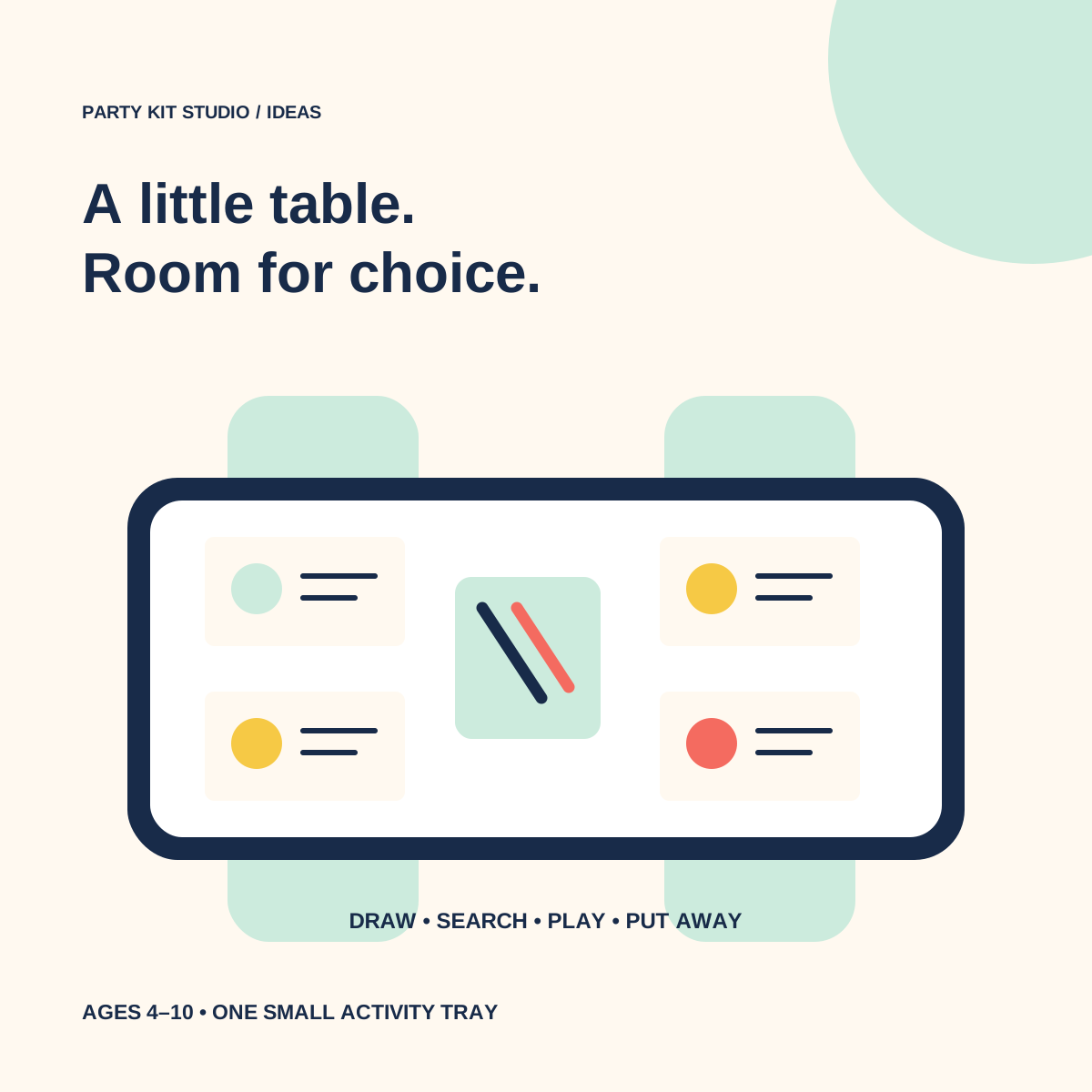
Begin with one creative page, one searching or maze page and one optional game. Put pencils and familiar crayons in a shallow container, with a folder or large envelope at each place for finished work. Set out only the first page initially. Keep the other choices in the tray so children are not sorting a whole booklet before they begin.
Our Thanksgiving Kids’ Table Activity Pack offers coloring pages, picture bingo, word search, maze and I Spy activities for ages four to ten. Review the included pages and choose a small set for your guests. You can use the remaining activities another time; printing every page is not required for a useful afternoon.
For six children receiving three individual pages each, start with eighteen student pages, then add any shared game or adult reference sheets you actually need. This is a sample print plan, not the pack’s page count. Proof one page before making copies, especially if your printer’s default setting reduces the artwork.
Give younger and older children different ways to begin
At a mixed-age table, the same invitation can have more than one response. A younger child might color a picture, point to a matching symbol or trace a possible maze route with a finger before using a pencil. An older child can add a pattern, choose a search strategy or explain how they checked a result. Use these as options rather than rules attached to a birthday.
For a child who is not reading independently, begin with a visual activity and read any necessary directions together. Do not make word search the only available choice. An older child who wants to draw quietly does not need a harder worksheet merely because they can read more.
Invite older children to help if they want to, while keeping an adult responsible for the group. Being the oldest at the table should not automatically mean managing everyone else. A younger child can also offer a useful idea, choose a color or explain a picture; avoid making one-way helping the whole activity.
Use one short shared game to bring the table together
Picture bingo can give children a shared starting point without requiring everyone to read a long question. Explain the winning pattern using the actual cards before beginning. Name each picture, show the calling image and leave time to find it. Keep called images visible so players can check a possible win with the adult leading the round.
Prepare a different supplied card for each player when possible, and check how many distinct cards your chosen set contains before inviting a large group to play. Shared wins are possible even with different cards. If two children complete the pattern on one call, acknowledge both rather than turning the check into a race to shout.
For a short round, penciled marks are an easy option when you do not need to reuse the sheets. If using counters, choose materials appropriate for the children present and supervise their use. Finish the current call when it is time to clear the table; it is fine to stop without a winner and return to the game later.
Keep a flexible before-and-after-meal rhythm
Treat this as a sequence you can pause, not a promise that children will sit for a fixed stretch. Start with an individual page as guests arrive. Offer a short shared game when enough children are ready. Put the papers away before serving food, then bring out one quiet option afterward for anyone who wants it.
If dinner is delayed, give children a choice between continuing their page, starting the second activity or joining a grown-up elsewhere. Avoid adding a new rule every few minutes to hold their attention. A small supply of blank paper is useful for someone who has their own drawing idea.
When older guests want a game too, the Thanksgiving Games Bundle gives the grown-ups another option, including trivia and gratitude cards. Check its activities against the people attending and the time available. We would choose one shared game rather than trying to complete the entire bundle between dinner and dessert.
- On arrival: one coloring or drawing invitation already waiting at each place.
- Before the meal: an optional shared picture game, led by an adult.
- At serving time: papers into folders, supplies into the tray and the surface cleared.
- Afterward: a maze, search activity or free drawing for children who choose to return.
Make cleanup part of the setup
Write a child’s chosen label on their folder before the activities begin, or let them decorate it. Use it for both completed and unfinished pages so there is no sorting job at the end. Keep one small place for used paper and one for reusable supplies. Explain the difference when you first show the tray.
Before guests leave, invite children to choose what they want to take home. There is no need to display or compare every page. Save unused materials and note what worked: fewer pages, a shorter game or more drawing space. Next year’s table can start with that practical observation.
Questions, answered.
Does every child need the same activity?
No. Offer a visual choice, a creative choice and an optional shared game. Children can join in different ways while still sitting and talking together.
Can these ideas work without a separate kids’ table?
Yes. Use individual activity folders or a small shared tray at the family table, then clear the materials before serving. Children can choose a place near a grown-up.