
THANKSGIVING GAMES
Thanksgiving Games for a Small Group: A Plan for Four to Six Guests
A Thanksgiving gathering of four, five or six people has its own rhythm. Everyone can hear the conversation, the host may be playing too, and a long team tournament can feel larger than the occasion. We like Thanksgiving games for a small group that use the seats already around the table and finish while people still want another turn. This plan gives you a short opener, one main game and an optional quieter closing. There are arrangements for an odd number of guests, too.
Hosts planning a small adult or teen-and-adult gathering
Choose the seating and the kind of evening first
Ask whether people want a little competition, a shared puzzle or simply a reason to talk. Ask when people are ready to play. For a small gathering, one main game is usually enough to prepare. Keep a second option nearby only if it is easy to explain and uses the same materials.
Our Thanksgiving Games Bundle Printable includes trivia, bingo, Turkey Feud and gratitude cards among seven games. Read the instructions for the specific game before choosing it for your guest count. The arrangements below are hosting suggestions. Follow the printed rules for your chosen game.
Use the whole table if that is where guests are comfortable. Clear enough room for a sheet and pencil at each place, and keep the host’s answers out of view. Set drinks somewhere that does not require moving game pages each time someone reaches for a glass. There is no need to make a separate game room.
Give four, five and six guests workable roles
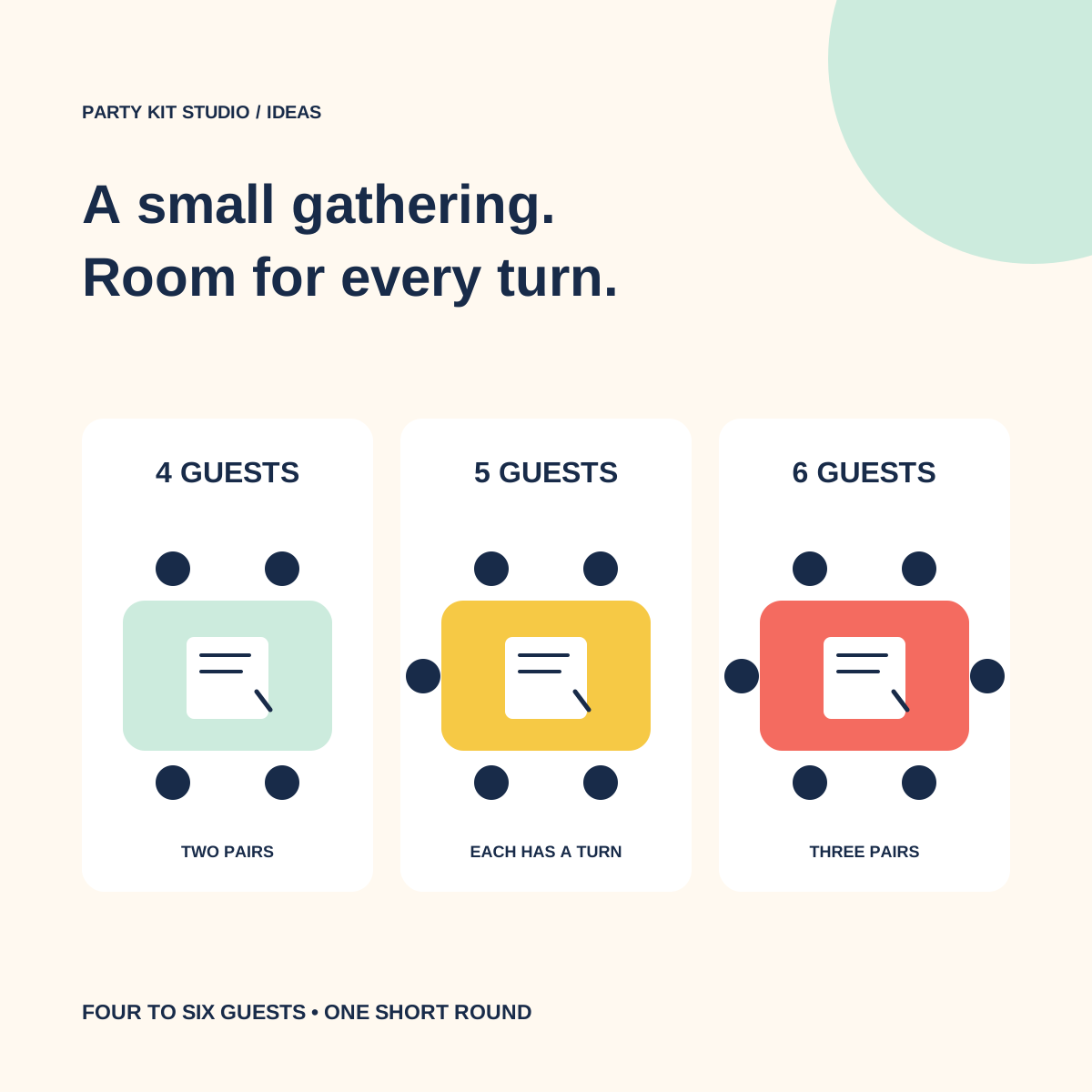
With four players, two pairs can discuss answers before one person writes. Let partners choose who reads and who records, then swap those jobs if both want a turn. Pairing makes it possible to contribute an idea without announcing an answer to everyone immediately. Explain that each pair gives one shared response.
With five, consider individual answer sheets and reveal them together, if that suits the selected game. Nobody has to sit out as a permanent judge. If an activity needs a reader who sees the answers, agree whether that person is hosting that round or rotate the role between separate rounds. Do not give a player an answer key and then expect them to compete on the same questions.
With six, three pairs keep the discussion manageable. For games whose printed rules call for a different arrangement, follow those instructions or choose another activity. Equal-sized groups are useful, but a comfortable role matters more than making the seating look perfectly symmetrical.
- Four guests: two pairs, each with one shared answer page when the activity allows it.
- Five guests: individual answers or a clearly agreed rotating host role.
- Six guests: three pairs, with enough time for every pair to respond.
- Any group size: explain who reads, who writes and how an answer is checked before starting.
Start with one unscored choice
Before introducing rules, give everyone a small everyday choice: choose one useful object for an imaginary picnic, or decide what belongs in a basket for a rainy afternoon. Let each person write or say one answer, then invite a short reason. These are original conversation prompts for this guide, not questions claimed to be in the printable bundle.
Keep the first round unscored. Someone might name a book, a pencil or a blanket, and none needs defending as the best answer. If two people choose the same thing, let that become an opening for conversation. If a guest passes, move on without making their choice the subject of the round.
Stop after one prompt or about five minutes. This opener should make it easy to begin, not become a second game with a new set of rules. When people are ready, show the main activity and explain how its first turn works.
Keep the main game short and the answers clear
For a question-based game, read through the material beforehand and select a manageable round if the instructions allow one. Check the answer key before guests arrive. Tell players whether they can discuss, how they should record an answer and when everyone will reveal it. Explain that process before the first question.
Read the question, give thinking time and invite all answers before showing the key. Avoid making the quickest voice the automatic winner unless that is part of the agreed rules. For a small table, simultaneous written responses can let quieter guests contribute without interrupting anyone.
Decide how to handle an unclear answer before scoring begins: accept what the supplied key allows, discuss a reasonable ambiguity together or leave that question unscored. Do not add invented facts to settle a disagreement. If checking a question would interrupt the evening, move on and enjoy the rest of the round.
If the group prefers a noncompetitive activity, choose a conversation or gratitude card instead. A personal response should not become a scored answer. Keep those two kinds of activity separate so everyone knows what sort of contribution is being invited.
Use a half-hour outline with permission to finish early
Place the game between two familiar parts of the gathering, such as clearing plates and serving dessert. Tell guests it is a short option, then follow their interest. The schedule below leaves room for explanation and a natural ending; it is a planning example, not a stated runtime for any product.
If conversation takes off during the opener, you can stop there. If the main game runs longer than expected, skip the closing prompt. Avoid making every stage mandatory simply because it appears on the plan.
- Minutes 0–5: offer one unscored choice and hear brief responses.
- Minutes 5–8: explain the main game, roles and ending.
- Minutes 8–23: play one round at the pace the group can follow.
- Minutes 23–28: offer an optional gratitude prompt or open conversation.
- Minutes 28–30: put the pages away and move to the next part of the gathering.
End with something people can choose to share
A gratitude card can invite a small observation rather than a speech: something useful, a pleasant moment or a detail someone noticed today. Guests may answer aloud, write privately or pass. Keep the prompt broad enough that nobody needs to explain family relationships or personal difficulties at the table.
For more ready-made options, browse the Thanksgiving Games Bundle Printable on Etsy and check the current listing before choosing your game. We would begin with the pages for one round, a few pencils and a plan for how it ends. A small gathering gives you room to listen to every answer without filling every minute.
Questions, answered.
Can five people play without someone sitting out?
Often, yes: choose an activity that supports individual responses, or agree on a rotating host for separate rounds. Check the printed rules before deciding the arrangement.
Do we need prizes for a small Thanksgiving game?
No. A shared activity can be the whole point. If guests want competition, agree on simple scoring and an ending without making a prize essential.