THANKSGIVING CLASSROOM
Thanksgiving Early Finisher Activities: A Quiet Choice Board for Grades K–5
One student finishes with twelve minutes to spare; another needs the whole lesson. We want the first child to have something worthwhile to do while the second keeps working without a roomful of new instructions. Thanksgiving early finisher activities can help when the routine is simple: check the original work, choose one familiar task and know how to stop. This guide builds a small choice board around that routine. The aim is a usable classroom system, with seasonal pages as one option, rather than an extra stack everyone must complete.
Teachers and classroom helpers · Grades K–5
Start with a three-choice board
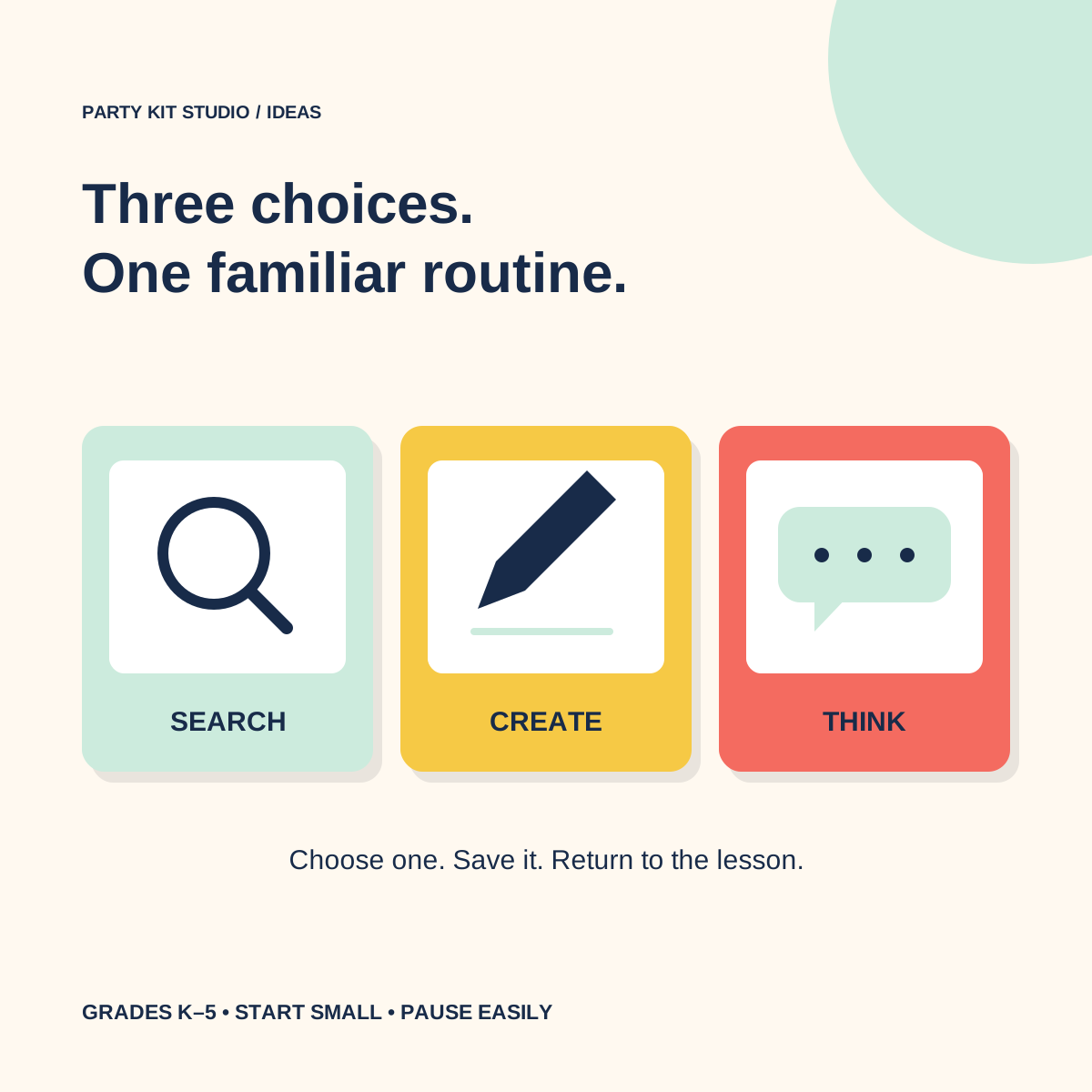
Write three choices where students can see them from their seats: Search, Create and Think. Add a simple symbol beside each word, such as a magnifying glass, pencil and speech bubble. Put the matching materials in three labeled trays, or use folders passed to each table. A child should be able to connect the board to the right materials without asking you to identify every page.
Keep the same three categories for the week. Change an individual page only after students know the routine. Too many choices can turn a quiet transition into a tour of the supply area. We would begin with one task in each category and keep a familiar book or drawing option available for children who prefer it.
Our Thanksgiving Classroom Activities Printable includes word search, I Spy, maze, coloring and thankful-writing pages you can select for these trays. Choose only the pages that suit the students using them. The choice board and extensions below are suggested ways to use activities, not extra worksheets included in the pack.
Teach the routine before you need it
Introduce the board at a moment when the whole class can listen. Model finishing an ordinary assignment, checking it against the instructions and choosing a tray. Show how to take one page and return supplies. Then model the ending: put unfinished work in the designated folder, return the pencil and face the next lesson. Practice the routine together before using it during independent work.
Make access to the board depend on the usual work-checking process, not being the first person finished. Avoid presenting the most appealing activity as a prize for speed. Students should still know that careful work, questions and needed help belong in the original lesson.
For younger children, practice choosing between two options before offering all three. Older students can read a short direction card independently. Use the same quiet-help signal you already use during lessons, so early finishers are not learning a second system for getting your attention.
Search: use a task with a clear place to pause
An I Spy page works well as a short choice when students can focus on one type of picture at a time. Suggest selecting a symbol, searching the page in rows and recording what they find. A child with five minutes can complete one search rather than rushing through every picture. Use a printed sample to show the method before offering it independently.
For a word search, let students choose a small goal, such as finding three words from the list. Older readers can mark the words they plan to seek first. A child who is still learning the words may prefer I Spy or a picture-based task instead. Choose a task the child can use independently.
Treat checking as part of the activity. Where an answer key is supplied, keep it in a checking folder and explain when to use it. For another task, model a quick visual review. Students can leave a small pencil mark beside the place they stopped, making the page easy to resume later.
Create: give a small invitation, not a finished example to copy
Offer a coloring or drawing page with one optional design challenge: use a repeating pattern, choose three colors or add a border. Children can also make their own choice. A completed adult example may be useful for demonstrating a technique, but it does not need to become the picture everyone is expected to reproduce.
Keep materials ordinary and already available. Pencils and a shared box of familiar crayons are enough for a transition activity. If accessing a supply takes longer than the available work time, leave that material for a different lesson. The activity should be easy to start and easy to put away.
Make a reusable direction card for the tray: choose one area, add detail, then check whether you want to continue. Finishing one small area gives students a stopping point. Do not require a completely colored page before allowing a transition.
Think: offer a response that fits one small space
Use a thankful-writing page with a concrete prompt, such as something useful in the classroom or a small action that helped today. Students can draw, label, dictate when support is available or write a sentence. Offer a neutral drawing alternative and let responses stay private. Nobody needs to describe home life to participate in an early-finisher activity.
For a short extension, ask students to add one reason or one visible detail. “A book” can become a drawing of an open page; “a helpful object” can gain a label showing what it does. These are original prompt ideas for the routine, not claims about exact wording printed in the product.
Save partner discussion and games for times when two students are available and nearby work will not be interrupted. Independent choices should remain complete options on their own. A child should not have to recruit a classmate who is still finishing an assignment.
Plan five-minute and longer versions
Use the same materials with different stopping points instead of maintaining separate stacks for every amount of spare time. Tell students that unfinished pages can be saved, and show exactly where. At the end of the week, let them choose whether to finish, take home or recycle their own work according to the classroom routine.
After a few days, review which tray students can use without repeated questions. If a task keeps drawing you away from teaching, simplify its directions, demonstrate it again or replace it. A small board earns its place by working in the room. Keep the choices manageable and let the routine become familiar before adding more.
- About five minutes: find one picture type, color one area or draw one useful object.
- About ten minutes: complete a short puzzle goal, add a pattern or write a sentence with a reason.
- A longer interval: check the first task, then continue it or make one new choice after following the usual work-checking routine.
Questions, answered.
Do early finisher tasks need to be graded?
For this routine, we would use them as optional practice and creative choices rather than another graded assignment. Follow your classroom expectations and explain the purpose to students.
What if a child keeps choosing the same activity?
A familiar choice can be useful. Check whether the child can begin and stop independently, then offer an optional variation without requiring a different tray every day.