
THANKSGIVING CLASSROOM
10 Thanksgiving Classroom Activities for Grades K–5 (All Printable)
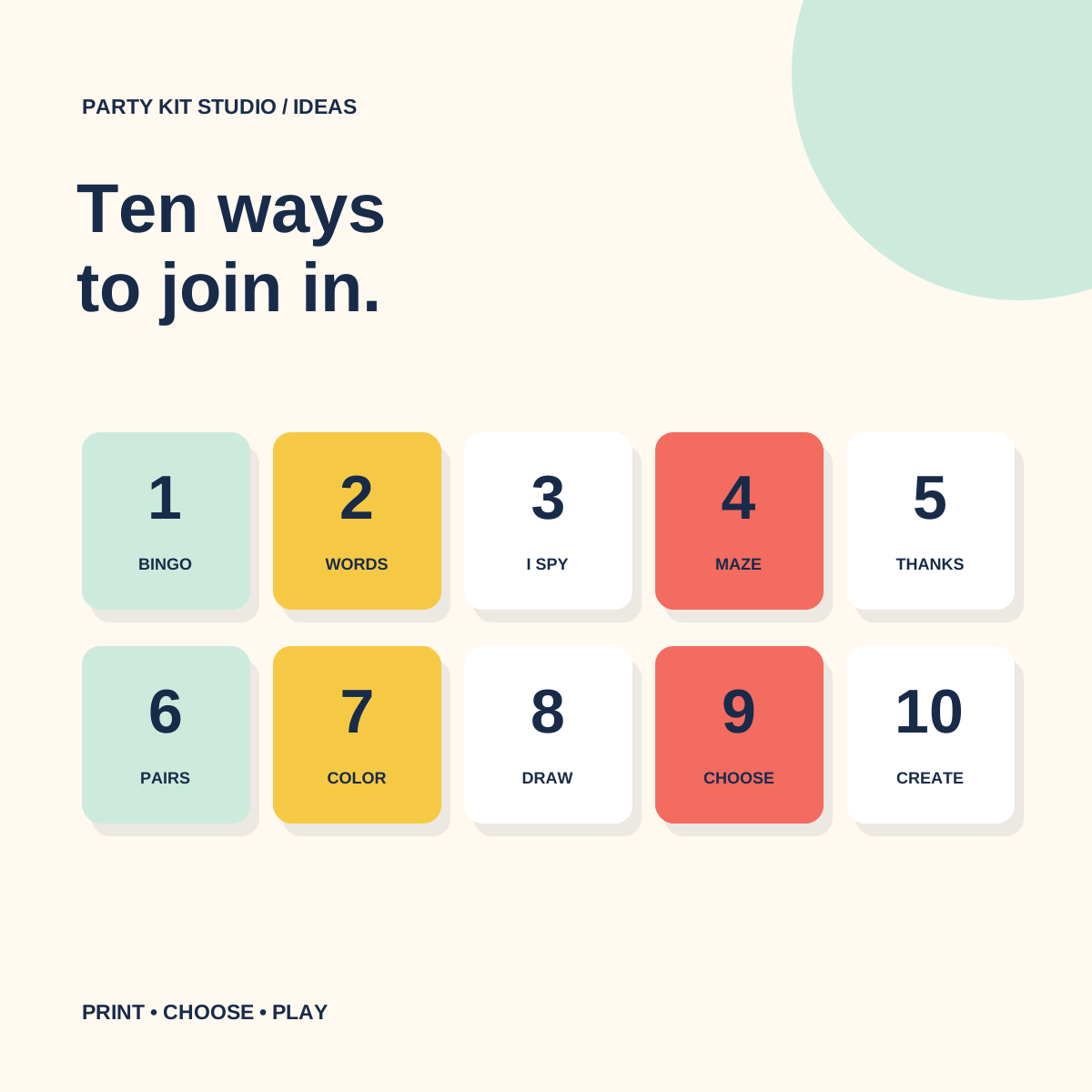
A useful collection of Thanksgiving classroom activities should give you choices, not another long list to complete. We would pick two or three activities for one session, then save the others for transitions, a class celebration or an optional take-home task. The first nine ideas below use activity types in our Thanksgiving Classroom Activities Printable. The tenth is a simple teacher-made printable extension. Each has a quick how-to plus a way to adjust the challenge without asking the whole class to work at the same speed.
Teachers and classroom helpers · Grades K–5
1. Picture bingo: find, mark and check
How to: give each student a different picture card, call and display one image at a time, and check a completed row against the pictures already called.
The classroom pack includes thirty unique cards and a cut-out calling-card sheet. For younger students, name and show each picture, then give scanning time. For older students, invite a different child to describe a called picture after it has been identified. Keep the win signal quiet and tell students whether shared wins count before the first call.
2. Word search: choose a search strategy
How to: look for the listed words, mark each one in the grid and check finished work with the included answer key.
This is a pack activity. Younger readers can start with two selected words and look for their first letters. Older students can search independently, then explain whether rows, columns or another systematic approach helped. Check the actual puzzle directions for allowed word directions rather than assuming them. A partner can point while the other reads, with roles changing after each find. Avoid making the fastest finish the measure of success.
3. I Spy: search in small sections
How to: find the requested pictures on the I Spy page, count them carefully and compare the result with a second search.
The pack’s I Spy activity includes seasonal objects such as turkeys, pumpkins, leaves and pies. Suggest covering part of the sheet with scrap paper if the whole page feels busy. Younger students can focus on one picture type; older students can record counts and describe how they avoided counting the same object twice. If answers differ, invite students to show their search routes.
4. Maze: plan before drawing
How to: help the turkey reach the feast by tracing a route through the printed maze.
Use the maze from the pack with a pencil so students can revise a route. A child may first follow the path with a finger or a capped pen, then draw it. For a partner variation, one student describes a turn while the other points to it; change roles before making permanent marks. Students who finish can explain one dead end they avoided. You do not need to add a timer or a harder puzzle to make the task worthwhile.
5. Gratitude writing: notice one small thing
How to: complete a thankful-writing response with a specific object, action, place or everyday moment, using words, drawing or both.
The pack includes an “I am thankful for…” writing page. Offer examples that do not depend on family structure or holiday plans: a library corner, a warm coat or a classmate making room. Younger students can dictate a label; older students can add why their example matters. Sharing should be optional. We would respond to the detail a child noticed rather than ranking answers by how moving or generous they sound.
6. Tic-tac-toe: take turns with a partner
How to: choose one marker type each, alternate placing a marker in an empty square and try to complete three in a row.
The pack supplies two boards and cut-out turkey and pumpkin markers. Prepare pieces ahead of time if cutting would use the whole session. Keep each pair’s pieces in a small envelope or tray. Offer drawn symbols instead when loose pieces are unsuitable for your class. After a round, students can swap symbols and decide who starts next. Treat a draw as a normal result, then reset the board together.
7. Coloring: make one design choice
How to: choose a coloring page, select a small color palette and add color or patterns at your own pace.
The pack includes a friendly turkey and a feast coloring page. Give the activity a gentle focus, such as repeating a pattern on the feathers or using different marks for different areas. Students can also ignore the optional focus and simply color. Older children might add a background or a caption on separate paper. Leave room for unusual color choices; there is no need for every turkey to match a model displayed at the front.
8. Draw a plate: imagine a meal
How to: use the pack’s draw-your-plate page to sketch a real or imaginary meal, then label any items you want to describe.
Make clear that students do not have to report what they will eat at home. An invented picnic or a meal for a story character works too. Younger students can point and describe their drawings; older students might sort their labels into categories of their own choosing. Keep the conversation about the drawing rather than judging foods or comparing families’ celebrations. This page also works as a quiet alternative to a group game.
9. Would You Rather: explain a preference
How to: read a discussion card, give everyone thinking time and invite students to choose an option and explain a reason.
The classroom pack includes twelve large Thanksgiving question cards. Use only two or three at once, with a pass option and no correct answer. Students can point to a choice, hold up a numbered finger or talk with a partner before sharing. For older students, ask what new information might change their choice. Read the cards yourself first so you can select prompts that fit the group and the time available.
10. Appreciation postcards: make a printable extension
How to: print a sheet with two large rectangles, a drawing space and the starter “I noticed…”; invite students to make a short appreciation postcard.
This is our teacher-made extension, not an additional promised page in the pack. Children can thank a shared space, a helpful action or an unnamed person, and can keep the postcard. For families wanting a smaller collection, the Thanksgiving Kids’ Table Activity Pack is the at-home version to explore. It suits a family table or an optional activity with an adult; do not assume the classroom’s thirty unique bingo cards are part of that smaller pack.
Questions, answered.
Should we use all ten activities in one class party?
No. Choose a manageable mix, such as bingo, one quiet paper activity and a short gratitude response. Keep unused ideas for another day.
How do we adapt these activities across grades K–5?
Change the reading support, number of choices or length of response. Offer pointing, drawing, dictation and partner work as well as independent writing.