
THANKSGIVING CLASSROOM
Classroom Bingo Without the Chaos: Running a 30-Player Game
A thirty-player bingo game does not need thirty competing voices. It needs a routine students can understand before the first picture is called. We plan Thanksgiving bingo for the classroom around four small decisions: who gets which card, how a call is shown, what students use to mark it and how a possible win is checked. Make those decisions once, explain them clearly and keep the same sequence throughout the game. The aim is a shared activity with enough thinking time for everyone.
Teachers and classroom helpers · Grades K–5
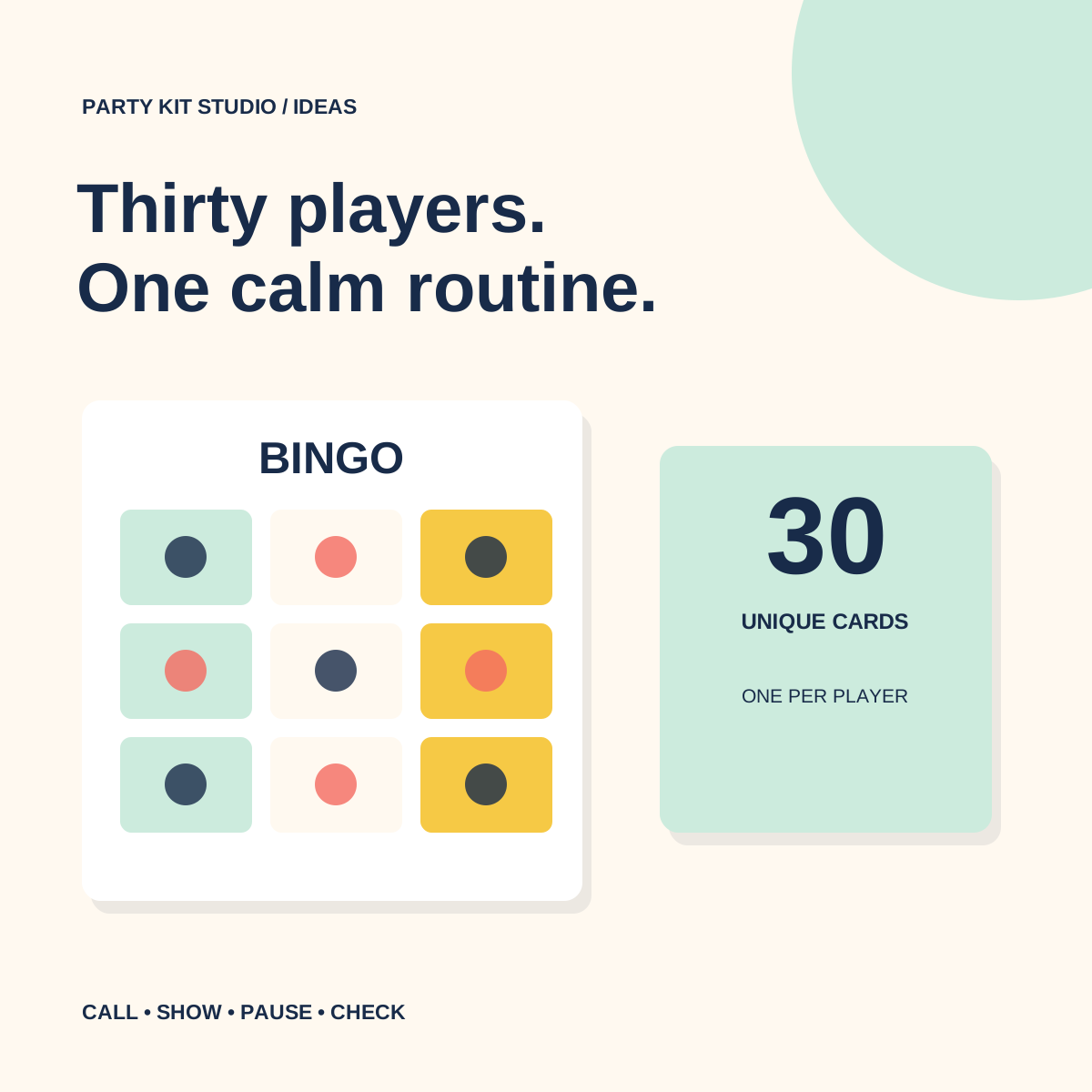
Prepare thirty different cards, not thirty copies of one
Our Thanksgiving Classroom Activities Printable includes thirty unique picture bingo cards and a cut-out calling-card sheet. Print one of each student card for a thirty-player class. Check the stack before distributing it, keeping pages in order until you have counted them. Printing one card thirty times would give everyone the same arrangement and remove the variation the set is designed to provide.
Different cards do not guarantee that only one student can win on a call. Several arrangements can complete a row at the same moment. Decide now that shared wins count, and tell students before play begins. With fewer than thirty students, use a subset of different cards. For a group larger than thirty, offer pairs sharing a card or separate sessions rather than promising an additional set of unique arrangements.
Set up a calling area students can actually follow
Cut out the calling cards before the session and place them in an opaque bag or face-down stack. Put called cards in a separate area, in the order drawn. The caller needs a clear separation between what remains and what has already been used. Returning a picture to the draw pile by accident can make a short game feel surprisingly confusing.
Say the picture name and show it at the same time. If the printed calling card is too small to see from the back, display it with your classroom document camera or walk it to a designated visible spot. Describe the image consistently rather than switching between several nicknames. Students should be able to check both what they heard and what they saw.
Choose markers that stay on the page
For a single round, a small pencil check in the corner of a square is often the simplest choice. Show students where to mark so the picture remains recognizable. If you plan to reuse the same sheet immediately, use flat paper squares or other familiar classroom counters on a tray. Choose materials that suit the students in front of you and your usual classroom procedures.
We would skip bouncy objects, loose handfuls and anything that encourages a second game across the table. Give students only the markers their card can use, plus one or two spares if needed. Explain the parking place for unused pieces. For students who find loose markers awkward, pointing with a partner or making a pencil mark is an equally valid way to play.
Teach the whole routine with a practice call
Choose one winning pattern that matches the printed grid, such as a horizontal row. Show an example of that pattern without covering the entire card with competing possibilities. If the card has a marked free space, explain how you are using it; otherwise, do not invent one. Save diagonal, multiple-row or full-card variations for another session.
Make a pretend call that is clearly labeled practice. Demonstrate looking across the card, finding the picture, marking it and putting hands back in a resting position. Then demonstrate what happens if the picture is not on the card: nothing needs to be marked. Students do not have to announce each missing picture to the whole room.
Agree on a possible-win signal, such as a raised hand or a card placed upright on the desk. Invite students to rehearse that signal once. Reset the practice mark, explain that the real game is beginning, and use exactly the routine you just showed.
Call at a steady pace and verify wins without a rush
Draw, name, show, pause. That is the full calling cycle. Watch for students who are still scanning before moving on. You do not need a fixed number of seconds between every call, but a predictable pause is kinder than a rapid stream followed by repeated requests to slow down. Pair assistance can help with scanning while leaving the student in charge of their own card.
When a student signals a possible win, finish the current call and pause the draw. Ask the student to point to or name the pictures in the completed row. Compare them with your called-card display. If the row is not complete, explain the missing match quietly and continue. There is no need to take markers away or make the check a public penalty.
If several students signal on the same call, check each before drawing again. Name the shared result and follow the ending you announced. For a short opener, one verified round may be enough. For a longer game, explain the next pattern and whether previous marks stay before resuming.
Use no-cost celebrations and a simple reset
A reward can be choosing the next classroom brain break, selecting a familiar read-aloud from two teacher-approved options or helping call the next round. You can also celebrate a completed game without individual prizes. Avoid attaching essential privileges, such as a needed break, to winning. The reward should feel light enough that an incorrect call is easy to recover from.
Give a specific group acknowledgment: students waited for the picture, kept the calling area clear or helped a partner find their place. Those are useful observations even when nobody completes the planned pattern before time runs out. Announce the final call instead of extending the game indefinitely in search of a winner.
Collect the calling cards separately from student cards. Place reusable counters back in trays and check the floor before moving to the next activity. Make a quick note of what you would change: a larger display, slower calls or fewer loose pieces. That is a more practical preparation for the next game than adding another complicated rule.
Questions, answered.
Can thirty unique cards still produce a tie?
Yes. Different arrangements can complete the chosen pattern on the same call. Explain shared wins before starting and check everyone who signaled before drawing again.
What if one student needs more time to scan?
Keep called pictures visible, slow the calling cycle and offer a willing partner. Students can point instead of moving counters or writing marks.