
BIRTHDAY PLANNING
Rainy-Day Birthday Backup Plan: Bring the Party Indoors
A rainy-day birthday backup plan needs an indoor space that fits everyone, a clear decision time and activities that can move inside. Keep the theme, food and birthday moment; change how guests play. We suggest four simple zones and one packed supply box for eight children ages 4–12, including the birthday child. Here is a complete two-hour version, with quiet choices available throughout.
Parents hosting eight children ages 4–12, including mixed-age siblings and tweens
1. Decide when and how to switch
Before invitations go out, count indoor places for children, supervising adults and caregivers who will stay. Check access to the entrance, bathroom and seating. If the whole group cannot fit comfortably, arrange another confirmed indoor location or a postponement plan.
Set your own decision deadline, such as the evening before, early enough for families to change travel plans. Check the local forecast again before setup. Ask the birthday child which moment matters most: a favorite activity, picnic food or cake reveal. Preserve that first.
- Write down the indoor address, start and pickup times, decision deadline and who will update families.
- Ask caregivers about food needs, access and useful quiet options before preparing the indoor room.
- Example update: We’re using our indoor birthday plan. The times are unchanged; please use the front entrance. Include the confirmed location and ask families to acknowledge the update.
2. Give each indoor zone one job
Zones can share a room; they do not require four rooms. For this example, plan for two adults: one leads activities, while the other handles arrivals, refreshments and breaks. Arrange any additional support your guests need.
Keep the quiet place available during every activity, including food. Let guests leave and rejoin without losing a turn. In one room, use the corner farthest from conversation, leave music off and explain that it is a lower-noise choice.
- Arrival zone: put a mat, two towels and a basket for wet outerwear beside the entrance, clear of the walking route.
- Main zone: arrange eight reachable seats around the activity table. This becomes the eating table after paper supplies are cleared.
- Quiet zone: reserve two seats within adult view, two firm drawing boards, paper, crayons and two familiar books. An adult supports younger siblings; older guests remain participants.
- Serving zone: keep food and drinks on a separate stable surface, with finished artwork stored elsewhere. Leave the quiet seats free when serving.
3. Pack one indoor supply box
These quantities cover eight children, including the birthday child. Use existing household supplies and keep the box ready even if the forecast looks promising. No printer or cutting is needed for the activities.
- Paper: 32 sheets—8 for arrival drawings, 8 for the drawing relay, 8 reserved for quiet drawing, 4 zone signs and 4 spares.
- Drawing: 8 pencils, 16 crayons and 1 adult marker. Keep 4 crayons at the quiet place and share the other 12 at the main table.
- Organization: 2 supply trays, 8 take-home envelopes and 1 scrap box, plus the two drawing boards, books, mat, towels and wet-clothing basket listed above.
- Refreshments: 8 cups, 8 plates and 16 napkins, plus agreed food and birthday cake. Add separate servings and tableware for attending adults.
4. Translate the outdoor activities
Move sidewalk-chalk art onto the arrival sheets: invite each guest to draw an imaginary garden party. Serve the planned picnic at the cleared table. Replace an outdoor running relay with this seated paper-picnic relay, keeping the feeling of building something together.
Number the eight relay sheets 1–8. Give each guest one and note their starting number. Guests choose to exchange sheets or keep their own. Everyone draws a picnic blanket for round one. Those exchanging pass one place clockwise within their group. In the next rounds, add a pretend party snack, an imaginary guest and a rain shelter, passing after rounds two and three. Allow about three minutes per round; unfinished drawings can travel too.
After round four, return sheets to their original owners by number. Invite optional sharing, then pack them in envelopes. A child may pass a sheet unchanged or direct the adult’s drawing. If a guest takes a break, the adult passes the sheet at that seat along unchanged.
- Ages 4–7: offer two choices for each prompt, such as a tent or umbrella for shelter. Accept one large shape; an adult can add dictated details.
- Ages 8–9: add something that connects with an earlier drawing, such as a plate beside the picnic snack.
- Ages 10–12: invent a shelter with an unusual feature and label how it works. Avoid changing or crossing out another guest’s contribution.
- Any age: keep one sheet and complete all four prompts independently if exchanging artwork is uncomfortable. Quiet drawing and watching remain equal choices.
5. Use this two-hour indoor timeline
Keep the advertised start and pickup times. This example includes explanations and table resets; shorten optional sharing if you fall behind. Show guests the plan when they arrive so the change of location feels predictable.
- 0–15 minutes: welcome guests, settle wet belongings and offer garden-party drawings or books.
- 15–25 minutes: show the zones, explain quiet choices and demonstrate passing a relay sheet.
- 25–50 minutes: complete four drawing rounds, return sheets and offer optional sharing.
- 50–75 minutes: pack artwork, clear the table, wash hands and serve food and birthday cake.
- 75–100 minutes: finish arrival drawings, read or choose quiet drawing. Invite guests to describe their imaginary gardens if they want.
- 100–120 minutes: collect artwork, return shared supplies and welcome caregivers. Keep books available until pickup.
6. Tick off preparation and cleanup
Copy this checklist onto paper and keep it with the supply box. Prepare the room layout before party day so switching indoors means placing supplies, not redesigning the celebration.
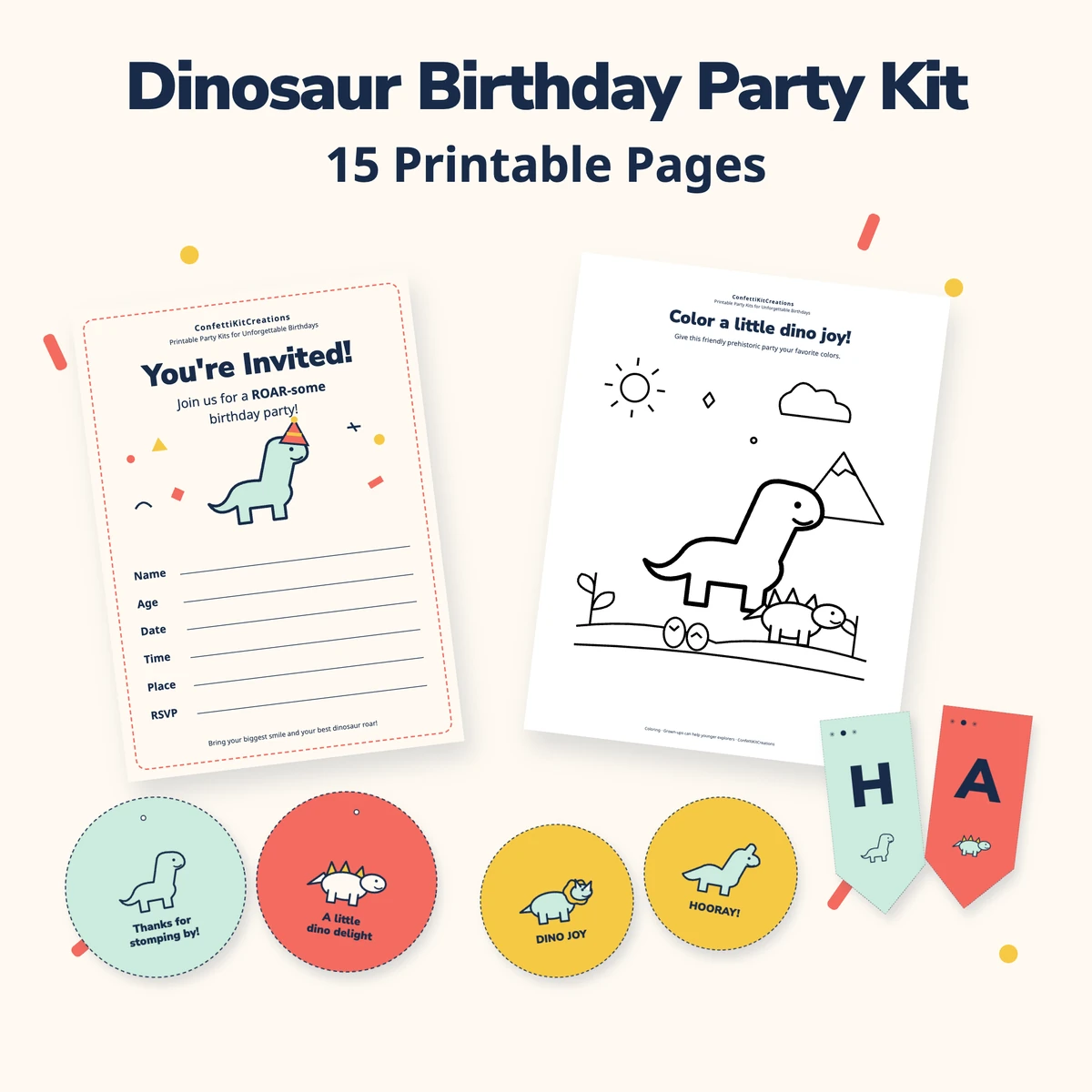
For a dinosaur theme, our Dinosaur Birthday Party Kit is an optional source of matching decorations: 6 PDFs / 15 pages, supplied as a non-personalized digital instant download through Etsy or Payhip. Checkout is external, with no physical shipment. These DIY activities are separate from the kit files.
- The day before: confirm the indoor location and adult roles; count supplies, label zones and number the relay sheets.
- Before guests travel: make the weather decision, update families and check that everyone has received the location.
- Before arrivals: clear walking routes, arrange seats, stock the quiet place and put any decoration-cutting tools away.
- During the party: keep wet belongings at the entrance, clear paper before food and replenish quiet supplies.
- At pickup: give out artwork and gather tableware. Afterward, wipe surfaces, hang towels to dry and save clean spare paper.
Questions, answered.
What if rain starts after the outdoor party has begun?
Pause the activity. One adult leads guests to the prepared main zone while the other checks that everyone has come inside. Offer the arrival drawing sheets while adults reset. Move food and decorations after the children are settled; the next activity can wait.
What if our home cannot hold the original guest list?
Confirm another suitable indoor location or postpone before guests set out. Include attending adults when checking space. Preserve walking routes and the quiet option instead of squeezing in extra furniture, and tell every family directly about changed arrangements.