
RACE CAR BIRTHDAY IDEAS
Race Car Birthday Party Ideas: A DIY Pit Crew Party for Ages 5–10
Turn your table into a tiny race circuit with a paper-car workshop, a gentle push-and-roll track and a cooperative pit crew challenge. We designed this race car birthday party plan for eight guests ages 5–10, using cardboard, paper and a few toy cars you already own. Children can choose their own colors, take turns and work toward a shared finish instead of being eliminated from games.
Parents planning an at-home birthday for eight children ages 5–10
Set up a garage, a track and a quiet table
Choose one table for decorating cars and another flat surface for the track. Keep the track away from food and walking routes. If you have only one table, finish the craft first, gather the scraps and then bring out the track. A separate drawing spot gives guests a way to take a break without leaving the theme.
Use Coral, Sunshine and Midnight for a bright racing palette. Make a paper welcome sign, a checkerboard backdrop and simple numbered place cards. Our theme research found race cars prominent in one independent supplier's order data; that is inspiration for this plan, rather than a market-wide popularity claim.
- For eight guests: 8 cardstock sheets for folded cars, 8 drawing sheets and 8 large paper number cards.
- For the games: 2 small toy cars, a large flat cardboard sheet, painter's tape, a ruler and 4 empty paper cups.
- For shared craft supplies: 2 packs of washable markers, 4 glue sticks and adult-use scissors. Skip loose glitter to simplify cleanup.
- For the backdrop: 2 sheets each of dark and light paper, plus removable wall-safe adhesive tested on your surface.
- Prepare refreshments separately and check food needs with caregivers. Keep cutting tools with the supervising adult.
Start with a paper-car workshop
Before the party, fold each cardstock sheet in half across its shorter direction so it stands like a small tent. On both outer sides, an adult draws a simple car body, two wheels and a window. Leave the bottom fold intact and do not cut the silhouette out; the folded card is a tabletop decoration, not a rolling toy.
Give each guest one folded car, a drawing sheet and access to markers. Let children add stripes, a driver, headlights and a racing number. Invite them to invent a team name or simply choose a favorite color. Place the finished cars around the table as their own garage display.
- Ages 5–7: offer a large outlined car and a few broad stripes to color. An adult can write a chosen number.
- Ages 8–10: invite guests to design a matching team logo and draw a garage sign on their spare sheet.
- Seated option: keep all materials within reach and let a guest describe a design for a helper to draw.
- Allow about 20 minutes, including sharing supplies and putting finished cars aside.
Play the gentle tabletop parking challenge
On a flat cardboard sheet, mark a straight lane about 24 inches long and 8 inches wide. Mark a start line and three parking zones across the far end, each roughly one car-length deep. Place the cardboard flat on a table; no ramp or launching is needed. Try your toy cars beforehand and adjust the lane length to suit how far they roll.
One guest takes three turns, gently pushing a toy car from behind the start line and trying to leave it inside a parking zone. An adult retrieves cars before the next turn. Celebrate a parked car, then invite the guest to change one thing about their next push. There are no fastest-driver prizes and no guests sit out after a missed attempt.
- Keep waiting hands behind the start line and stop play if anyone reaches into the lane.
- Ages 5–7: combine the last three zones into one large garage and move the start closer if needed.
- Ages 8–10: give each zone a number and ask guests to park in a chosen sequence, with another turn after a miss.
- A guest who prefers not to push can choose the target zone, record attempts or direct a helper.
Run a cooperative pit crew challenge
Split eight guests into two crews of four. Give each crew four paper cups, four number cards and a folded paper car. Explain three jobs in order: put the numbered cards in a row from 1 to 4, stand one cup behind each card and place the car at the finish. The fourth guest checks the order and announces that the garage is ready.
Everyone stays at their station; this is a tabletop task rather than a running relay. Reset the supplies and rotate jobs for four rounds so each child can try each role. The crews succeed together when both garages are ready. Keep the instructions visible and offer help whenever a crew asks.
- Ages 5–7: show the completed arrangement first, then leave the example visible.
- Ages 8–10: add a repair brief such as reverse the number order, or put a cup only behind even numbers. Check the requested pattern together.
- For four guests, run one crew with the same rotating jobs. For a larger group, add another complete station instead of longer waiting lines.
Follow a two-hour party schedule
Keep the games short enough that cake and pickup do not depend on completing a challenge. If an activity finishes early, use the drawing table or let guests show their car designs. For a younger group, shorten individual turns and spend the extra time on relaxed drawing.
- 0–15 minutes: arrivals, water and choosing racing numbers.
- 15–35 minutes: decorate folded paper cars and garage signs.
- 35–55 minutes: tabletop parking challenge, with drawing available while waiting.
- 55–70 minutes: refreshments and a bathroom break.
- 70–90 minutes: cooperative pit crew rounds.
- 90–105 minutes: birthday cake and sharing favorite designs.
- 105–120 minutes: pack paper cars, gather supplies and welcome caregivers.
Prepare ahead and make cleanup part of the finish
The day before, fold and outline the cars, test the toy-car lane and prepare two sets of pit crew cards. Put each activity's supplies in a separate container so transitions take minutes rather than a full table reset. Take a quick photo of the finished setup for your own reference when arranging it again.
At the end, let guests collect their paper cars and drawings. An adult counts the toy cars, removes track tape and checks the surface for stray supplies. Save the cardboard track and number cards for another afternoon. This guide does not include a downloadable race-car kit; all described materials can be made by hand.
- Offer participation through drawing, pointing, arranging or directing a helper; no guest needs to move quickly to join in.
- Avoid decorating every room. One garage table and one checkerboard focal point are enough to carry the theme.
- Keep a small spare-paper stack ready for guests who want a quiet activity or a second design.
Questions, answered.
Do we need expensive toy tracks or a printer?
No. This plan uses a flat cardboard track, two toy cars and handmade paper supplies. Write numbers and draw outlines by hand; a printer is optional.
Can we host a race-car party without racing?
Yes. Use the car-design workshop and cooperative garage challenge as the main activities. Guests can help through drawing, sorting or checking instructions, with no timed competition.
How can we adapt the party for mixed ages?
Use a wider parking target for younger guests and optional number-pattern challenges for older guests. Share the same theme and schedule while letting each child choose a comfortable task.
Is a race-car printable kit included with this guide?
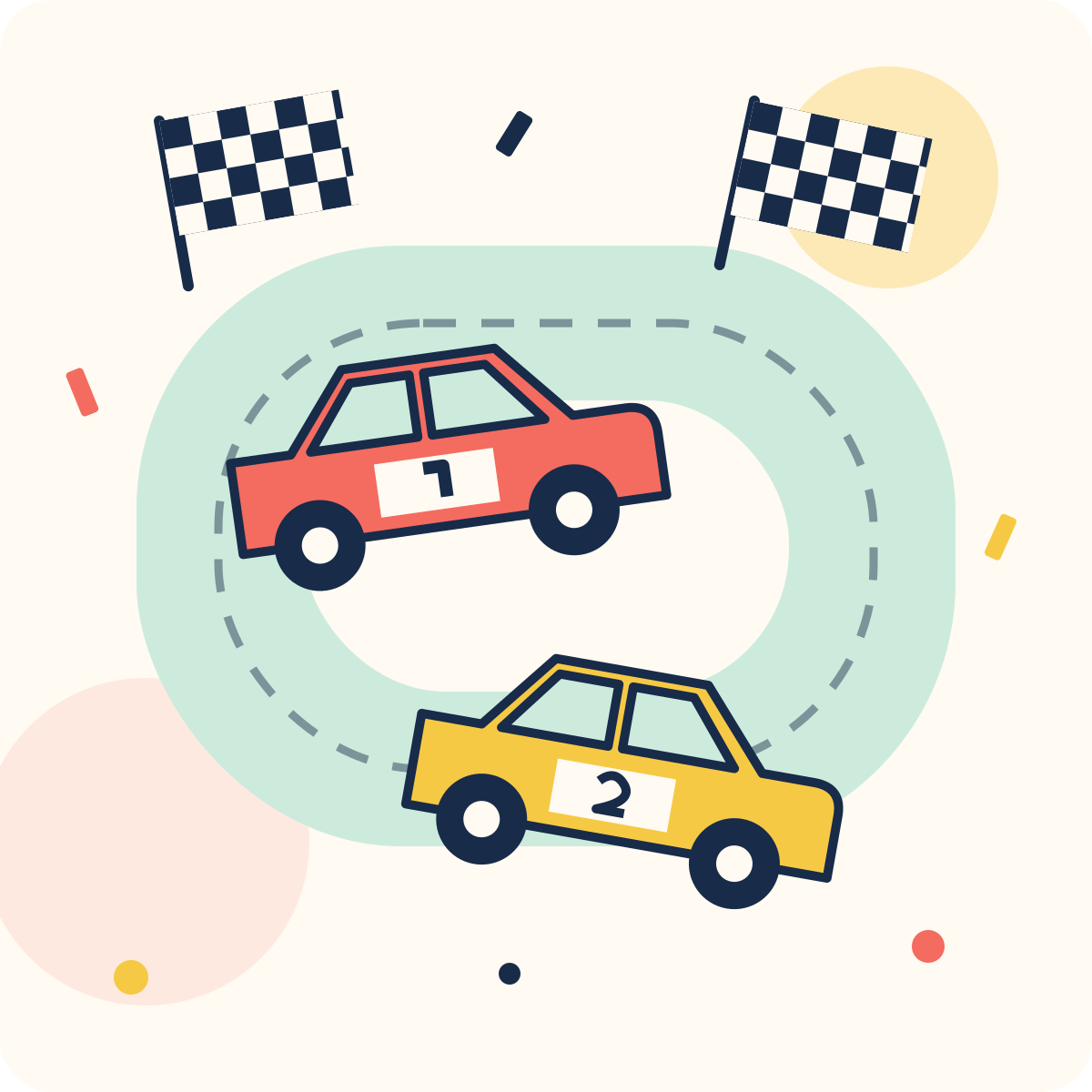
No. This is a free DIY party-planning guide. The illustration is original editorial artwork, and the paper crafts and game materials are made by hand.