
THANKSGIVING CLASSROOM
Gratitude Activities for the Classroom: Prompts Kids Actually Answer
“What are you grateful for?” can be a surprisingly large question when you are looking at a blank page. We prefer to start smaller: something that helped today, a place that feels comfortable or an ordinary object that does a useful job. These gratitude activities for kids in the classroom offer three different ways to respond. Each fits a ten-minute window and can stand on its own. You can use writing, discussion or drawing without expecting children to disclose personal experiences or produce an especially touching answer.
Teachers and classroom helpers · Grades K–5
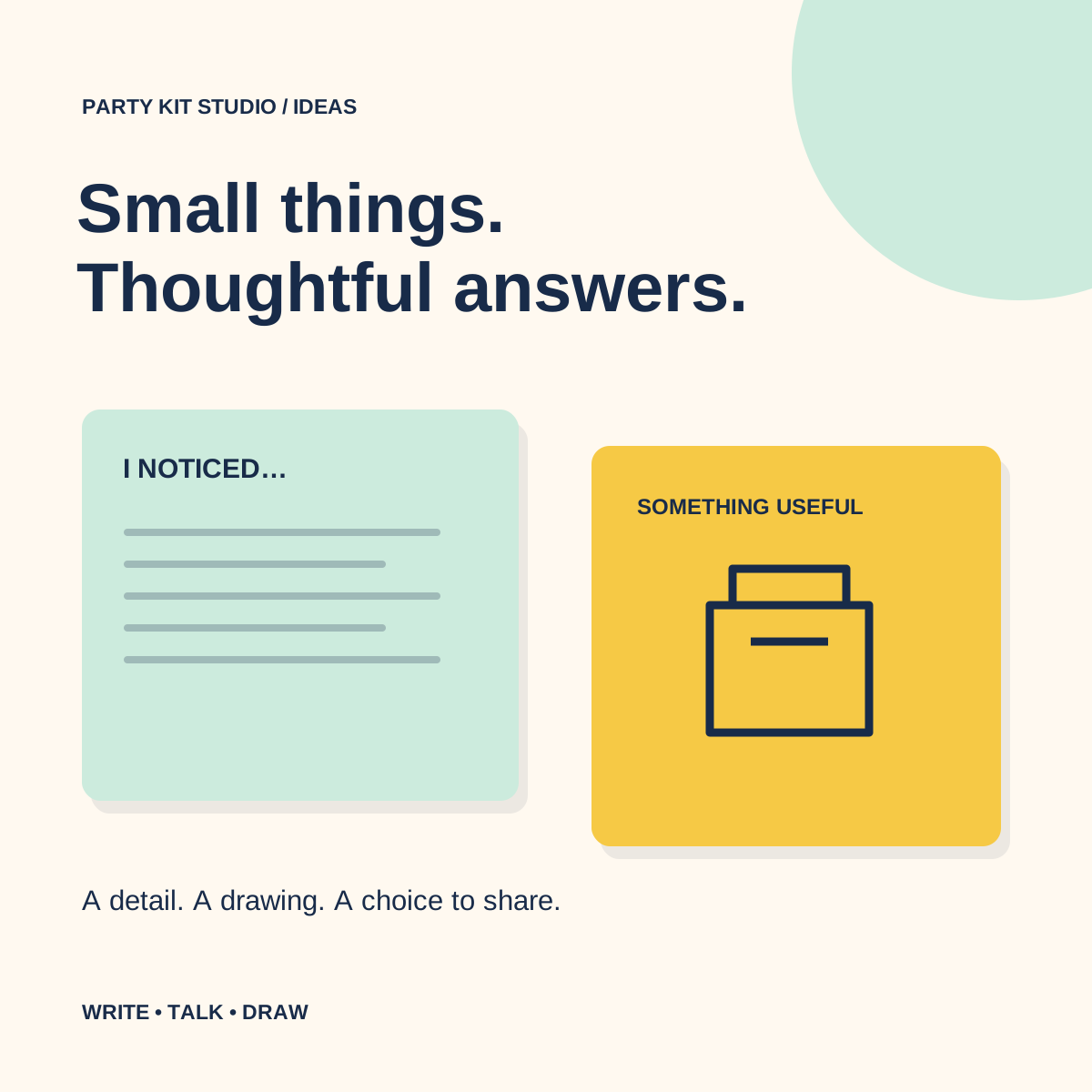
Make the invitation specific and leave room to pass
Explain gratitude as noticing something you appreciate, then offer a concrete example from classroom life. A working pencil sharpener or a shelf where books are easy to find gives students a manageable starting point. Avoid presenting a model response as the right answer everyone should imitate. The useful part is the detail the child notices, not how impressive the subject sounds.
Say that students may choose a different prompt, draw instead of write or keep their work private. Some children may not feel thankful at that moment; they can describe something useful or something they would like to appreciate more. This is a short classroom activity, not a test of attitude. Do not require a happy family story, a holiday meal description or a public message to a particular person.
Ten minutes of thankful writing
Use a sheet with enough room for the response you expect. The thankful-writing page in our Classroom Edition activity pack gives you a printable starting point. Younger students can draw and dictate a label; older students can write a few sentences explaining why the example matters. The same prompt does not need to produce the same length of answer across the room.
- 0–2 minutes: read two prompts, give one neutral example and let students choose.
- 2–7 minutes: write, draw or dictate; offer a sentence starter only when it helps.
- 7–9 minutes: invite optional partner sharing or quiet rereading.
- 9–10 minutes: let students decide whether to keep, display or take home the response.
Prompts that give children somewhere to begin
We suggest prompts that work without knowing a child’s family structure, possessions or holiday plans. Offer a choice between noticing an object, a place and an action. Children can answer about school, an imaginary setting or another place they choose. If a prompt does not fit, changing it is part of the activity rather than a reason to sit out.
For an early writer, “I appreciate…” may be enough of a starter. For an older student, add “because…” or “I noticed this when…”. You can also invite a response in a familiar language, with translation only if the child wants to explain it. The aim is to communicate an observation, not to make gratitude depend on writing fluency.
- What is one small thing that helped you get started today?
- Which classroom object does a useful job that people might overlook?
- Where is a place you like to pause, read or think?
- What is an action someone could take to make sharing materials easier?
- What is something in nature you enjoy noticing?
- What did you learn to do that now makes a task easier?
Ten minutes with discussion cards
Choose two or three prompts and place one on each table, or read a single prompt to the whole class. Give silent thinking time before anyone speaks. A partner conversation can come before wider sharing, and a student can simply listen. We would use a clear turn order rather than asking everyone to compete for the first response.
Our Thanksgiving Games Bundle includes gratitude table cards that you can consider for a small-group discussion. Read the cards yourself and select wording that fits your students. The prompts above are original suggestions for this guide; they are not a claim that those exact sentences appear in the bundle. You can write or print them on plain paper instead.
During discussion, acknowledge each contribution without asking classmates to judge it. A follow-up such as “What did you notice about that?” leaves room for detail. Avoid turning a quiet answer into a demand for a personal story. If the conversation becomes lively, finish the current turn and name the next opportunity to continue.
- 0–2 minutes: introduce the prompt and explain that passing is welcome.
- 2–3 minutes: allow quiet thinking, pointing or a quick sketch.
- 3–8 minutes: take turns in pairs or small groups, with an adult reading when needed.
- 8–10 minutes: invite one optional observation from each group, then collect the cards.
Ten minutes of gratitude drawing
Offer a large blank drawing space and invite students to show something useful, enjoyable or appreciated. A close-up of a leaf, a shelf of books or a made-up reading corner can work just as well as a picture of a person. Keep the prompt open enough that children do not need to explain private relationships to participate.
Students can label the picture, dictate a caption or leave it without words. Ask permission before adding an adult-written label. If a child wants help beginning, suggest drawing one object first rather than an entire scene. Older students can add details showing how the object or place is used, or write a short caption about one feature they value.
- 0–2 minutes: offer the drawing invitation and show where materials are kept.
- 2–7 minutes: draw, add detail or create a caption at an individual pace.
- 7–9 minutes: invite a partner to look or allow quiet finishing time.
- 9–10 minutes: store or return work and put materials away.
End without turning gratitude into homework
Choose one format for today and notice whether it suited the class. You do not need to assign all three or require children to continue at home. A short, ordinary observation can be a complete response. We would rather leave students with ownership of their words and pictures than fill a display with answers they felt obliged to give.
For another session, change the prompt or response format instead of adding more rules. Keep useful sentence starters, blank paper and a small selection of discussion cards ready. The routine becomes easier when students know there is room to choose, take their time and participate without performing for an audience.
Questions, answered.
What if a child says they cannot think of anything?
Offer a concrete prompt about a useful object or a comfortable place, or let the child draw quietly. Passing or choosing another activity is acceptable.
Do students have to share their gratitude writing?
No. Let students decide whether to share, display or keep their work private. Make that choice clear before they begin.