EVERYDAY PRESENCE
Breathing Cue Cards for Your Desk: A Simple Pause Routine
A small card beside your screen can give you a place to pause between one thing and the next. You notice the words, leave the mouse alone for a moment and bring your attention back to where you are. That is the idea behind a breathing cue card: a visible reminder you can print and keep where you pause. Here is a practical way to choose one spot, try a simple routine and see whether the reminder fits your day.
Adults · A visual reminder for ordinary moments at home or at a desk
Choose a moment you already recognize
Choose an ordinary transition: opening your laptop, closing a meeting window or sitting down for your evening reading. Pick a moment that actually happens in your routine. A cue beside a desk you rarely use will have little opportunity to catch your eye. If you move between a kitchen table and an office, start with the place where you most often begin a task.
For a first attempt, write a short plan on scrap paper: After I close my first meeting, I will look at the card and pause before choosing my next task. The event tells you when to look; the card gives you something simple to return to. You can change either part if the plan feels awkward in practice.
Keep the experiment small. For the first few days, use noticing the card as your checkpoint. When it catches your eye, decide whether that is a useful moment for a pause. This gives you a concrete starting point and a way to adjust the setup around your actual day.
- Choose one transition: starting a task, finishing a call or sitting down with a book.
- Choose one location where you can read the card comfortably.
- Choose one small action after the pause, such as opening the next document or putting the phone down.
Choose a reminder that feels comfortable
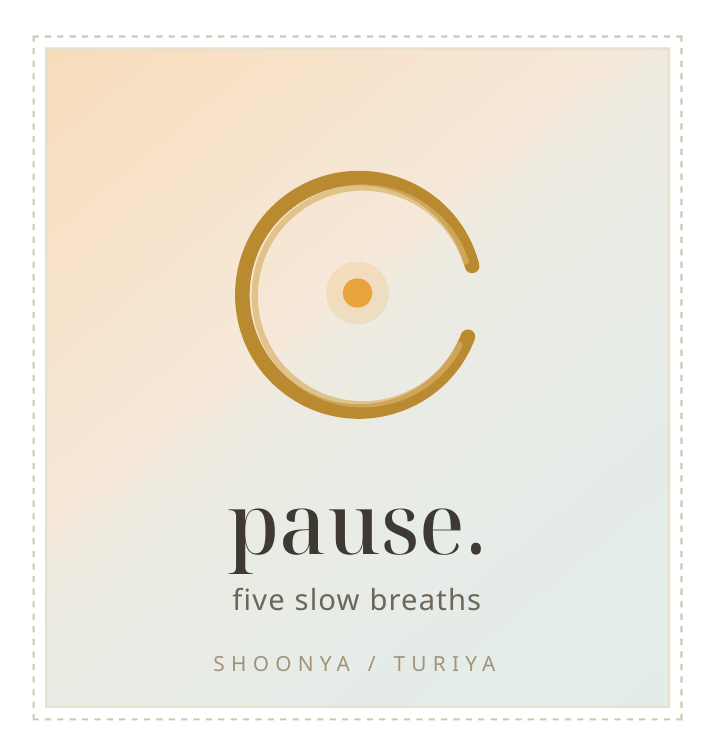
Our Breathing Cue Cards Printable includes box breathing, 4-7-8 and calm reminder designs for a desk, monitor or mirror. These are different prompts; you do not have to cycle through every technique. The cover card shown here says pause. five slow breaths. You can begin by using those words simply as an invitation to stop and notice.
If you follow a counted breathing exercise, read its instructions first and choose an approach that feels comfortable. You can also use a calm reminder while breathing normally. Choose the simplest version you want to return to: looking at the words, noticing the room or following a familiar breathing prompt.
The NHS breathing guide recommends gentle breathing at a comfortable depth without forcing it, with counting only if it helps. Its full exercise is linked below. Our brief desk pause is a separate everyday reminder, not a claim to reproduce that exercise or its effects. If focusing on your breathing feels uncomfortable, return to your usual breathing and look around the room instead.
- Use one design at first so the message is easy to recognize.
- Keep the wording large enough to read from your normal seated position.
- Let the reminder be optional. There is no need to finish a count that feels uncomfortable.
Print one test and give it a useful place
If you buy the printable on Etsy, print from the purchased files. Etsy’s help page says digital downloads are accessed through a computer or mobile browser, not through the Etsy app. Signed-in buyers can use Purchases and the order’s Download Files option; guest buyers use the download link in their receipt email. The official help page is linked below if you need the current steps.
Read the supplied file and printing instructions before choosing paper size or scaling. Print one test first, then check the words at the distance from which you will use the card. Do not shrink it simply to match a space that is too small. Move it to a clearer spot instead. There is no need to print the whole collection before you know which reminder you want.
At a desk, stand the card beside your notebook or place it where you see it when your hand leaves the mouse. Near a monitor, use the surrounding desk space rather than covering the screen, camera or ventilation. By a mirror, choose a dry place where the wording remains readable. A small holder can help, but use something you already own if it works.
- Desk: beside the notebook you open at the start of the day.
- Monitor: within your normal view, with the working screen unobstructed.
- Mirror: a dry nearby shelf or suitable surface, clear of splashes.
- Shared space: a personal notebook or removable holder that can be put away.
Try a pause before the next task
When your chosen transition arrives, stop the current action at a natural point. Finish sending the message or put down the pen; there is no need to interrupt something halfway through. Look at the card and take a moment to settle into your seat. Leave your eyes open if that feels more natural.
Notice one ordinary thing that is already here: the edge of the desk, the color of the card or the contact of your feet with the floor. Then notice your breathing without trying to produce a special feeling. If you choose the five-breath reminder, let the breaths stay comfortable rather than stretching them to fill a timer. You can also stop at a simple visual pause.
If your attention moves to an unfinished task, you do not have to argue with it. Notice that the thought appeared and return to the card or the room. Being distracted does not mean you must restart the whole exercise. This is a moment of attention inside an ordinary day, with the day still continuing around it.
Before moving on, decide what you will do next in concrete terms: open the document, refill the water glass or close the laptop. Then do that one thing. This gives the pause a clear finish and connects it to the activity that follows.
Test the placement over a few ordinary days
Leave the first setup in place for a few days and notice when you actually see it. A card that disappears behind a mug may need a different position. A reminder beside the monitor may be useful when you finish a call but easy to overlook while you are reading on paper. Try moving it beside your notebook during a writing session and see which position you prefer.
At the end of the week, ask three practical questions: Did I notice it? Could I read it comfortably? Was the chosen moment a useful place to pause? Those answers tell you more about the setup than counting perfect days. Keep the arrangement, move the card or choose another design based on what you observed.
If you forget about it for a day or a week, begin again the next time you see it. You can change the wording, move the card or put it away. The routine is yours to adjust, including on busy days when a single glance feels like enough.
- Day one: place one card and choose one familiar transition.
- During the week: use it when you notice it; avoid adding catch-up sessions.
- At the next review: change one thing, such as its position or the chosen transition.
- Keep only the arrangement that you want to return to.
Use the same idea beyond the workday
The reminder can sit beside a book, near a hobby notebook or in the place where you prepare for guests. Before a gathering, you might look at it after finishing the table setup, then choose the next practical job. That gives the card a specific place in the sequence without turning the whole event into a breathing session.
In a shared space, let the card be an invitation that others can use or ignore. You can explain it simply: I keep this here as a reminder to pause between tasks. A notebook-sized personal setup is another option if you prefer to bring it out only when you are using the desk.
You can try the idea with a handwritten reminder before choosing a printable. Our Presence Cues designs provide a ready-made visual option if you prefer one. Review the Etsy listing for the current price, included files and printing details. This is a printable reminder for everyday use, not a treatment or a promise that difficult thoughts will disappear.
Questions, answered.
Do I need to use box breathing or 4-7-8 every time?
No. Choose a reminder that suits you. You can look at the card and notice your usual breathing without changing its rhythm or holding your breath. If you use a counted technique, read its instructions and do not force an uncomfortable count.
What if my mind keeps returning to my to-do list?
Notice the thought and return to the card or something you can see in the room. There is no requirement to empty your mind. When you finish the pause, choose one concrete next action rather than judging how still your thoughts became.
Can I start without buying a printable?
Yes. Write a short reminder on paper and try the placement first. The printable offers ready-made designs; it is not necessary for taking a pause. If you purchase it, use the downloaded files and their printing instructions rather than the listing photograph.