
BIRTHDAY PLANNING
Birthday Party Preparation: A Weekend Checklist for Home
Use Saturday for printing, assembly and an activity rehearsal; save Sunday for room setup and final checks. We’ve built this checklist around eight children, including the birthday child, and a Sunday party from 2–4 pm. Each work block ends with something finished and packed, so preparations can pause without leaving a mountain of paper.
Parents hosting children ages 4–12, tweens and mixed-age families
Saturday, 9:00–9:20: count guests and gather supplies
Start with invitations sent, attendance checked and food arrangements agreed. Confirm pickup time, caregiver attendance and any support guests need. Schedule shopping and food preparation separately. These work blocks are planning allowances; extend them for larger assembly jobs.
- Paper: 24 plain sheets—8 for arrival drawing, 8 for the main activity, 1 rehearsal sheet, 1 host checklist, 2 tray labels and 4 spares. Count any decoration printing separately.
- Tools: 8 pencils, 16 crayons, 1 dark marker, 1 ruler, 1 roll of tape and adult-use scissors. Add any assembly materials required by your chosen decorations.
- Packing: 2 activity trays, 8 folders large enough for the artwork, 1 decoration box and 1 scrap container.
- Refreshments and cleanup: 16 plates for separate food and cake servings, 8 cups, 24 napkins and 2 cleaning cloths. Add tableware and servings for attending adults.
- Finish point: write the confirmed headcount and missing supplies on the host sheet. Gather what you own before buying anything.
Saturday, 9:30–10:05: test before printing the batch
Make a short print list: file, selected page, copies needed and finished quantity. For one optional arrival sheet per child, print eight copies plus two spares, using ten of the 24 plain sheets. This replaces the blank arrival paper and uses two spare sheets. Extra decoration pages need their own paper allowance.
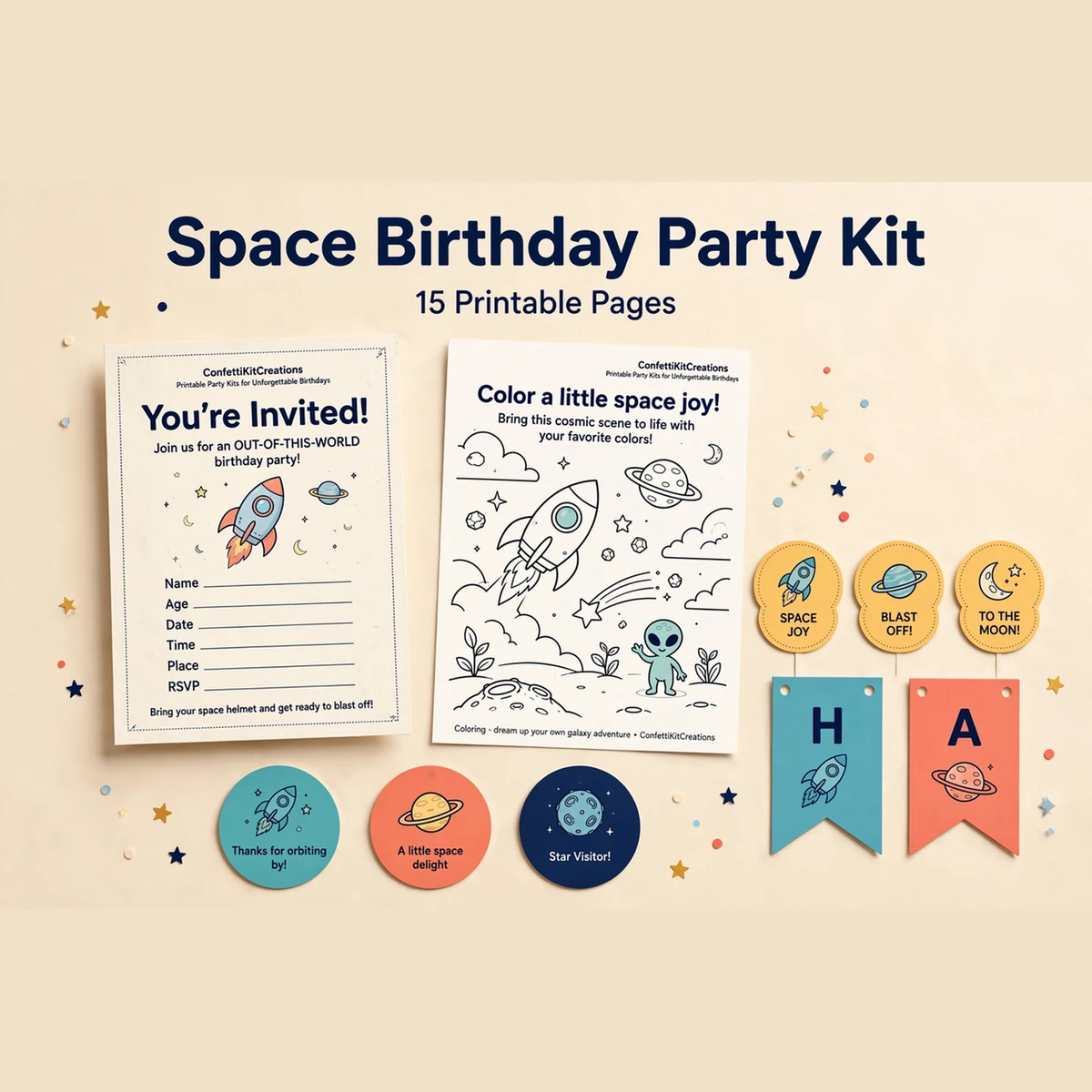
For a space theme, our Space Birthday Party Kit is an optional non-personalized digital instant download with 6 PDFs / 15 pages, available on Etsy or Payhip. Checkout happens through those external stores, with no physical shipment. The DIY activity below is separate from the kit files.
- Read the download’s instructions and check your printer’s supported paper. Print one selected page; inspect text, edges and any required finished dimensions before continuing.
- A usable test counts toward the batch. Set aside failed prints, then count usable sheets rather than sheets fed into the printer.
- Preview each activity before choosing it. Reading demands, puzzle difficulty and guests’ interests matter; a matching theme does not make every page suitable for every age.
- Finish point: stack the correct quantities by job. Keep instructions and any answer pages with the adult supplies.
Saturday, 10:20–11:00: complete one assembly batch
Clear the table and keep the tested example beside you. An adult handles cutting. Finish one type of piece before starting another. If assembly needs longer, use an afternoon block or drop an optional decoration.
- Work in order: cut the whole batch, count it, fold it, then attach or join pieces as instructed. Check one completed piece before repeating the attachment step.
- Lay a letter display in reading order and check spelling before joining it. Let glued pieces dry before packing.
- Put finished decorations and their installation supplies together in the box. Add a note showing where each piece will go.
- Finish point: label the box with its contents and count, collect scraps and put cutting tools away.
Saturday, 2:00–2:30: rehearse and pack the activity
Try the main activity once, including the explanation and packing up. One simple DIY option is a paper invention drawing: each guest draws an imaginary machine that sorts presents or delivers party hats, gives it a name and adds a useful feature. Offer optional sharing, with no judging or required presentation.
Use the rehearsal sheet for your example and eight activity sheets for guests. This is a drawing project; nobody needs to build a working machine. If you choose another activity, adjust the supply list and rehearse its rules instead.
- Ages 4–7: offer the two machine jobs aloud and invite one large drawing. An adult can write a dictated name or feature.
- Ages 8–9: suggest two connected parts and labels showing what each does.
- Ages 10–12: offer a three-step explanation and an optional redesign that works without buttons. Guests can choose the simpler version too.
- For any age: accept pointing or directions to a helper, offer reachable supplies and allow watching or a break. Adults provide support; older guests remain participants.
- Finish point: label the trays Arrival and Main activity. Pack eight sheets in each, keep spares and the sample with the host, and put eight folders nearby.
Sunday, 10:00–10:20: close the preparation list
Open each box and tick off what is ready. Keep the host checklist on top. Give any adult helper a specific job, such as welcoming guests or clearing the table before food.
- Check: eight arrival sheets, eight main sheets, eight folders, working pencils, completed decorations and remaining spare paper.
- Check: food arrangements, serving supplies, pickup time and who will support guests during breaks.
- Write only unfinished tasks on the host sheet, with a person and time beside each. Remove optional extras that would crowd the remaining preparation.
- Finish point: everything is packed by use, and the final setup list fits on the host sheet.
Sunday afternoon: set up, then follow the party clock
Reserve 1:15–1:45 pm for arranging seats, placing decorations, checking walking routes and setting out the arrival tray. Keep later materials packed. From 1:45 pm, finish essentials and welcome early arrivals; leave new craft ideas for another day. Complete food preparation on its separate schedule.
- 2:00–2:15: arrivals and optional drawing; explain where guests can take a quieter break.
- 2:15–2:40: demonstrate the invention drawing and let guests create.
- 2:40–2:50: collect artwork into folders, clear tools and take a water and bathroom break.
- 2:50–3:20: serve the planned food and birthday cake.
- 3:20–3:45: finish drawings, share inventions if wanted or enjoy familiar quiet play.
- 3:45–4:00: return supplies, collect folders and welcome caregivers for pickup.
After pickup: allow a 20-minute reset
Give reusable pieces a home before clearing the rest. Finish food and spill cleanup first, leaving the packed decoration box for later if needed.
- First 5 minutes: gather tableware and deal with food leftovers. Use the usual household waste containers.
- Next 5 minutes: count pencils, cap markers and save clean spare paper. Keep any forgotten artwork with the host list.
- Final 10 minutes: remove decorations, collect scraps, wipe surfaces and return furniture. Store reusable pieces together and note any supplies to replace.
Questions, answered.
What if the party is on Saturday?
Move the preparation blocks to the previous weekend and store materials by activity. Do the final count on Friday evening, then use the same setup window before Saturday’s start time. Keep food tasks on their own schedule.
What should we drop if preparation runs late?
Keep guest arrangements, food, one prepared activity and a clear room. Drop extra decoration batches and optional printed pages first. Blank arrival paper and the handmade drawing activity need no printer.
How do we adjust supplies for twelve children?
Use 12 arrival sheets, 12 activity sheets, 1 rehearsal sheet, 1 host sheet, 2 labels and 4 spares: 32 plain sheets. Prepare 12 folders and pencils, plus tableware for 12 children. Count decoration pages and adult servings separately.